Practical homeowner resources
Hot-water advice for Orange homes
Clear explanations for faults, replacement planning, energy choices and cold-climate performance.
Request a quoteFeatured guide
Cold mornings change the questions worth asking
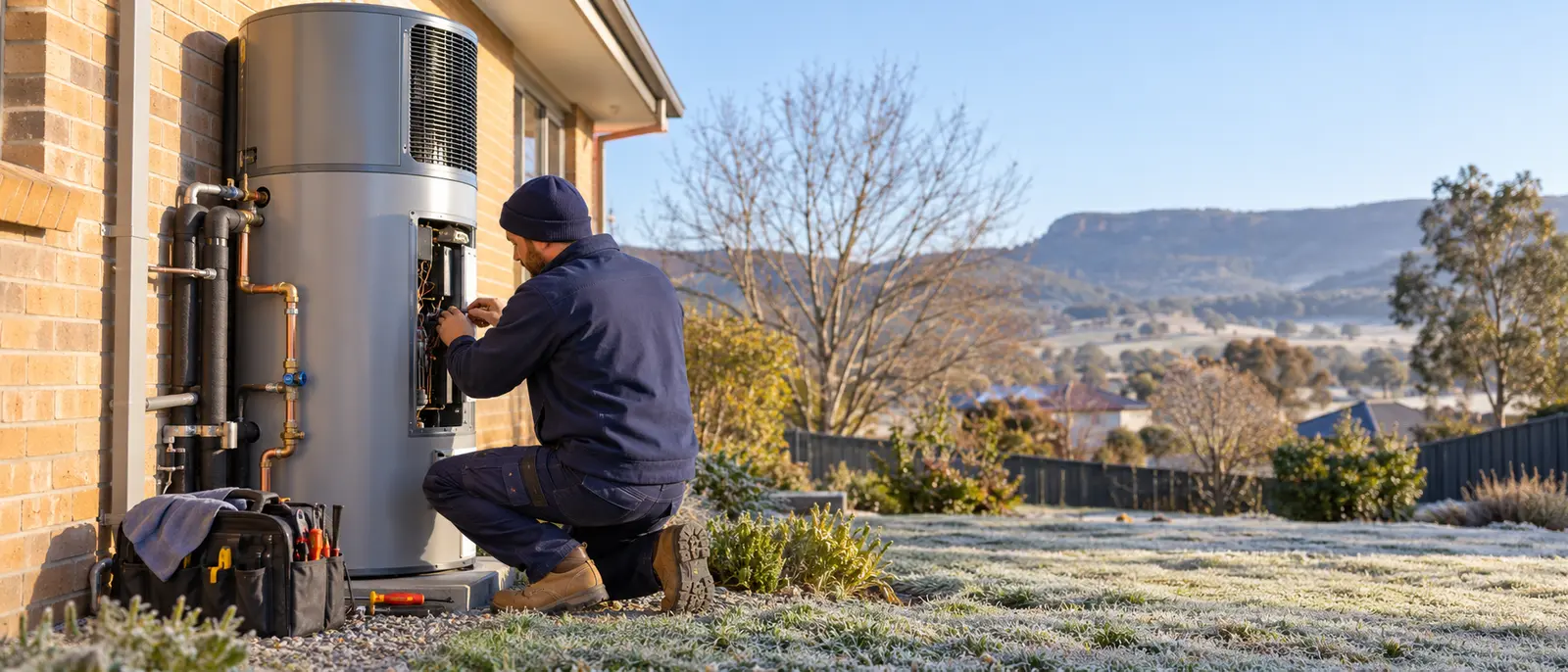
Cold-weather hot water in Orange
Learn how inlet temperature, recovery, positioning, household demand and model data can affect system experience through winter.
Read the guideQuestions these resources help answer
Repair or replacement?
Understand the observations that help separate a component fault from a failing storage vessel.
Which technology?
Compare heat pump, electric, gas and continuous-flow options around the property rather than hype.
What affects running cost?
Capacity, controls, tariff, climate, usage and installation can all influence the outcome.
What belongs in a quote?
Ask about removal, disposal, connection work, access, commissioning and exclusions.
Clear information helps
Tell us what is happening
Describe the current system, suburb, symptoms and what you need. Your enquiry can then be matched with a suitable local provider.
A useful research sequence
Move from the problem to the property, then to the product
Start by documenting the current situation. Identify the system type and approximate age if known. Record whether the problem is complete loss of hot water, reduced temperature, a leak, noise, slow recovery or a recurring winter shortage. Note which outlets are affected and whether the unit later recovers. These observations help a provider ask better questions without requiring you to diagnose the equipment.
Next, describe the property and household. Orange includes established Federation and weatherboard homes, mid-century brick houses, newer estates, rentals and semi-rural properties. Access, outdoor position, roof exposure, electrical capacity, gas supply, drainage and the distance to bathrooms can all influence the practical choice. Household size matters, but peak shower timing and simultaneous use matter too.
Compare exact products, not labels
'Heat pump', 'electric', 'gas', 'solar' and 'continuous flow' are categories, not complete recommendations. Two products within the same category may differ in capacity, recovery, low-temperature performance, noise, controls, warranty and local service support. Ask for exact model details and the evidence behind claims that are important to the decision.
Use incentives carefully. NSW programs, approved products and provider requirements can change. Verify current information through official sources and compare the full installed price. A discount should not distract from unsuitable sizing, unclear scope or poor cold-weather fit.
Keep safety boundaries clear
Online information can improve a conversation but cannot make hazardous work safe. Do not remove covers, adjust gas equipment, bypass electrical protection or alter temperature controls. Keep away from smoke, sparking, gas odours, scalding discharge and water threatening electrical equipment. Use the resources to prepare questions and recognise when a qualified assessment is needed.
The long-form guide library expands these themes in detail, including winter preparation, system sizing, incentives, warning signs and technology comparisons.
Browse all eight comprehensive guidesClear information helps
Tell us what is happening
Describe the current system, suburb, symptoms and what you need. Your enquiry can then be matched with a suitable local provider.
Turn research into a better quotation
When contacting a provider, ask for the exact product, capacity and installation assumptions in writing. Compare removal and disposal, valves, drainage, pipe alterations, electrical or gas work, access, commissioning, documentation, warranty responsibility and exclusions. If quotations differ greatly, first check whether they describe the same scope.
Keep the decision proportionate. An urgent failure may require a fast, safe restoration path; a planned upgrade allows more time to compare efficiency, household fit and future energy use. In either case, clear information reduces ambiguity and makes follow-up conversations more productive.
Review the answer against your original priorities
A technically capable system can still be a poor fit if it misses peak demand, creates unacceptable noise or depends on controls nobody understands. Ask the provider to explain the expected operating pattern in plain language. Check how the recommendation addresses winter recovery, installation position and future household changes. Keep product literature and the written scope so the final decision is based on the same facts that were discussed.
Use these resources to organise questions, then rely on a qualified provider's site-specific assessment, written scope and current product information.